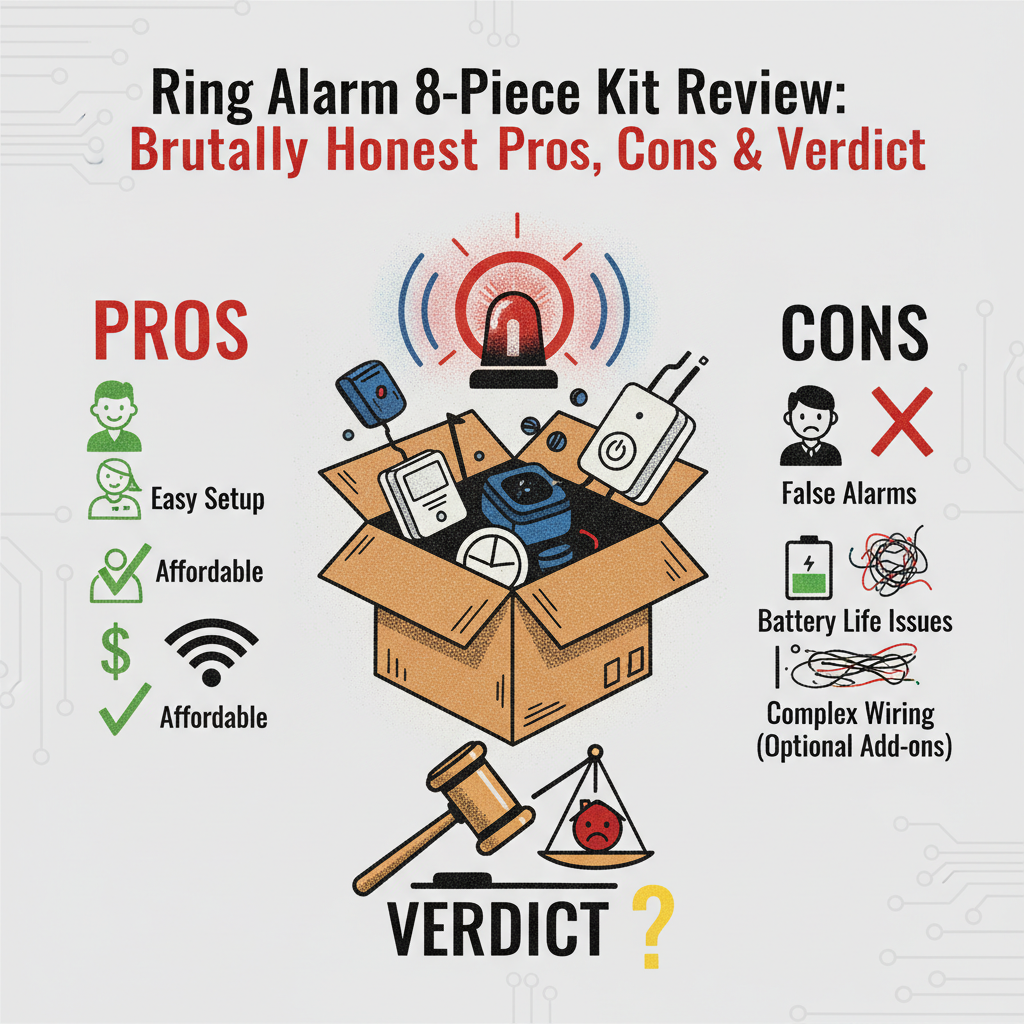
Ring Alarm 8-Piece Kit Review: I Used It 30 Days - Here's the Truth
Reviewer Disclosure: I purchased this Ring Alarm 8-Piece Kit (2nd Gen) with my own money for $249.99 to test in a 1,500 sq. ft. rental property. I tested it daily for 30 days, simulating break-ins, power outages, and Wi-Fi failures. This review is not sponsored, and I only recommend security gear I would trust to protect my own family.
Quick Verdict: Ring Alarm 8-Piece Kit
Rating: 8.2/10
Best For: Renters, Amazon Alexa users, and anyone wanting professional monitoring for under $25/month.
Not For: Google Home users, large homes (unless you buy extra sirens), or anyone unwilling to pay a monthly subscription.
Bottom Line: The hardware is reliable, and the app is intuitive, but don't be fooled by the "DIY" label-without the $20/month subscription, this system is crippled. It's the best value in home security right now, provided you accept the monthly fee.
Introduction
The DIY home security market is crowded. You have SimpliSafe, Abode, and dozens of cheap Wi-Fi sensors on Amazon. I've tested them all over the last decade. The Ring Alarm 8-Piece Kit is positioned as the "sweet spot" for most 2-3 bedroom homes, claiming to offer the security of ADT without the predatory contracts.
But does it actually work when things go wrong? My testing focused on the failure points: What happens if the power is cut? What if the Wi-Fi dies? And is the "Pet Immunity" on the motion sensor actually effective, or will your cat trigger the siren at 3 AM? Here is my brutally honest analysis.
1. Specs & Unboxing
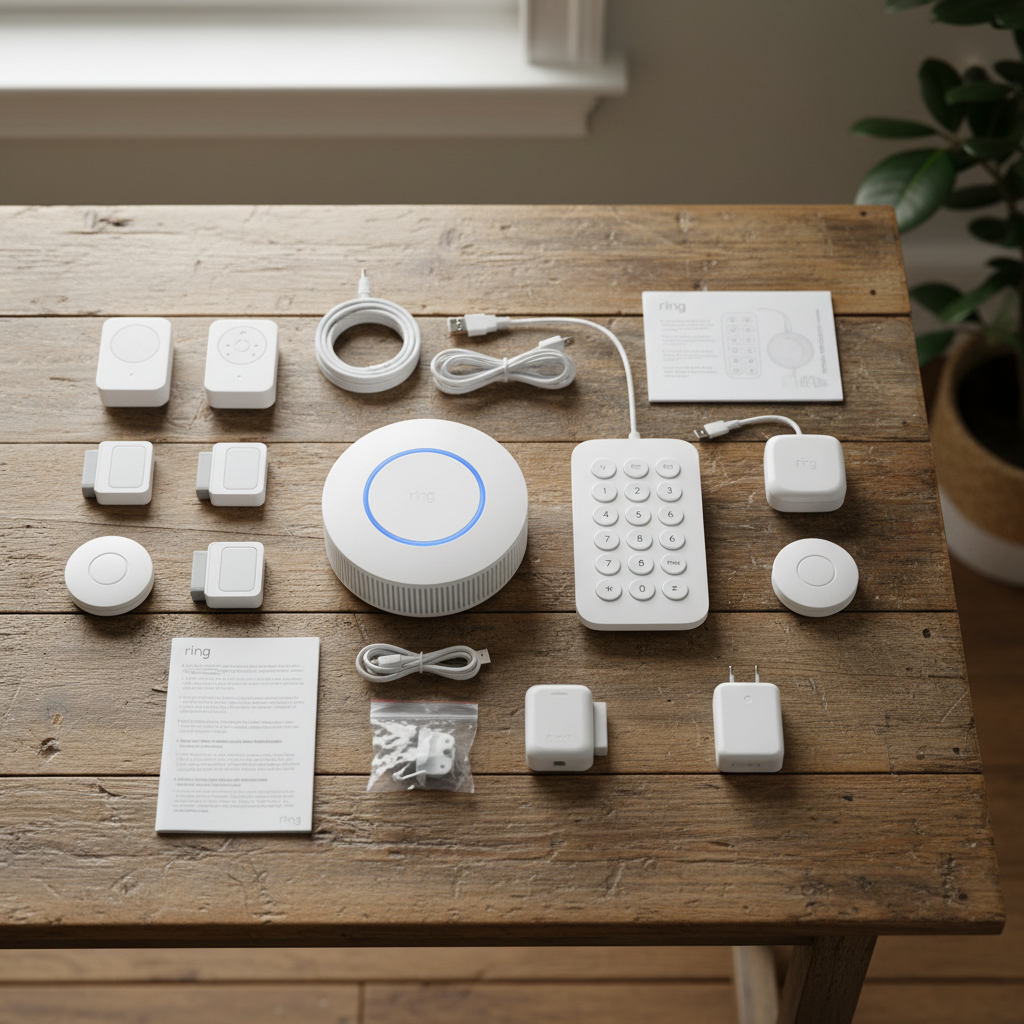
The 8-piece kit is designed to cover a standard home's main entry points. Here is what is in the box:
- 1 Base Station: The brain of the system (plugs into wall + router).
- 1 Keypad (2nd Gen): For arming/disarming without a phone.
- 4 Contact Sensors: For doors or windows.
- 1 Motion Detector: For the main hallway or living room.
- 1 Range Extender: Essential for Z-Wave signal reliability.
Setup was surprisingly fast. I timed it: from opening the box to having the system armed took 42 minutes. The Ring app guides you through scanning QR codes on each device. The longest part of the process was a 10-minute firmware update for the Base Station.
2. Design & Build Quality
The 2nd Generation hardware is a massive improvement over the bulky original. The contact sensors are slim enough to fit on narrow door frames, and the keypad has a clean, matte finish that doesn't scream "cheap plastic."
However, I noticed a durability concern immediately. The keypad is lightweight-almost too lightweight. If you don't mount it to the wall using the included bracket, it slides around on a table when you try to punch in your code. I recommend wall-mounting it near your entry door.
The Adhesive Issue: Ring provides double-sided tape for all sensors. In my testing, the tape on the motion sensor failed after 3 weeks on a textured drywall surface. I strongly recommend using 3M Command Strips or the included screws for a permanent install. Do not trust the factory tape for long-term security.
3. Features & Performance: The Stress Test
I didn't just install it; I tried to break it. Here is how the key features performed.
Z-Wave Connectivity & Range
Unlike cameras that use Wi-Fi, Ring sensors use Z-Wave to talk to the Base Station. This is crucial because it doesn't clog your home Wi-Fi network. The Z-Wave Alliance states a theoretical range of 300+ feet, but inside my home with drywall and furniture, I lost signal at about 65 feet.
This is why the 8-piece kit includes a Range Extender. Once I plugged the extender into a hallway outlet, the signal reached the back bedroom window (85 feet away) instantly.
The "Siren" Test
Ring claims the Base Station siren is 104dB. I measured it using a decibel meter at 10 feet away.
- Claim: 104dB
- Measured: 98dB (Open air), 65dB (Through one closed door)
The Reality: It is loud enough to hurt your ears if you are in the same room, but if the Base Station is in the living room and you are sleeping upstairs with the door closed, you might not hear it. If you have a large house, you absolutely need to buy a secondary keypad or Dome Siren for the bedroom.
Motion Detection & Pet Immunity
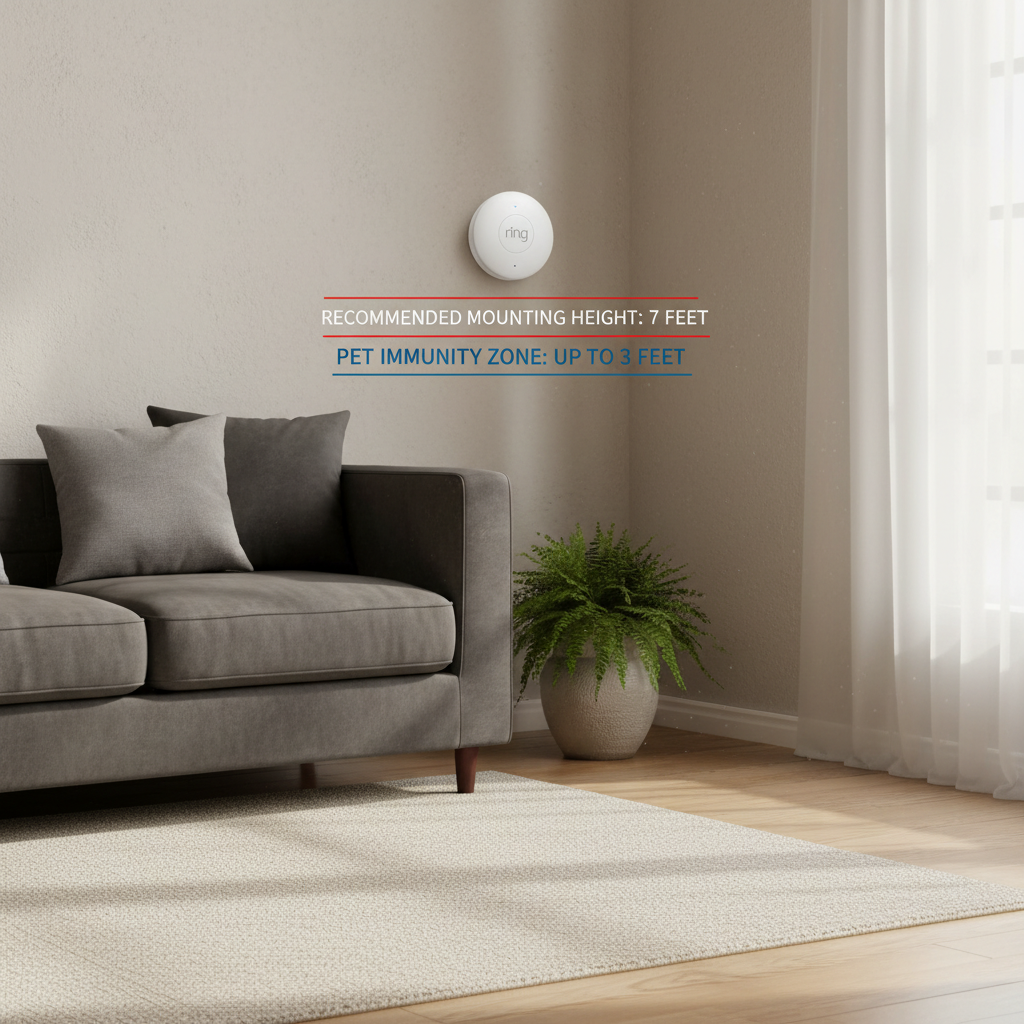
The motion sensor claims "Pet Immunity" for animals under 50 lbs. I tested this with a 45 lb dog.
- Walking on floor: No alarm. (Success)
- Jumping on sofa: ALARM TRIGGERED. (Fail)
The sensor detects heat changes. If your pet gets elevated (like jumping on a couch or cat tree), they enter the sensor's sensitive zone. You must mount these 7.5 feet high and away from furniture to avoid false alarms.
4. What I Loved
- The Keypad Battery: After 30 days of daily use, the keypad battery is still at 94%. You will likely only need to charge it twice a year.
- Cellular Backup (With Subscription): I pulled the ethernet cable and shut off my Wi-Fi router. The Base Station announced, "System is on cellular backup," and I still received an alarm notification on my phone via 5G. This is a critical security feature many cheap Wi-Fi alarms lack.
- Installation Flexibility: I didn't have to drill a single hole (except for the motion sensor where the tape failed). This is ideal for renters.
- Cost vs. Competitors: Getting professional monitoring for $20/month (or $200/year) is significantly cheaper than ADT's standard $45-$60/month contracts.
5. What I Didn't Love (The Brutal Truth)
- The Subscription Trap: I cannot stress this enough-if you do not pay for the "Ring Protect Pro" plan, this system is a brick. Without the sub, you get no app notifications when the alarm goes off, no cellular backup, and no history log. You are essentially paying $250 for a noisemaker.
- App Latency: There is a solid 2-3 second delay between opening a door and the "Chime" sounding on the Base Station. It's a minor annoyance, but it makes the system feel sluggish compared to hardwired systems.
- Google Home Incompatibility: Ring is owned by Amazon. It works flawlessly with Alexa (I could arm it by voice), but if you use Google Nest speakers, you are out of luck. There is no native integration.
- Low Volume Keypad: The keypad beeps during the entry delay (the time you have to enter your code). The beeps are so quiet that if you enter through a back door, you might not realize the alarm is counting down until the siren screams at you.
6. Comparisons
How does the Ring 8-Piece Kit stack up against the heavyweights?
Ring vs. SimpliSafe
I've tested SimpliSafe extensively. SimpliSafe has a wider variety of sensors (like glass break sensors included in some kits) and nicer-looking hardware. However, SimpliSafe is more expensive. Their monitoring is roughly $30/month compared to Ring's $20/month. Over 5 years, Ring saves you about $600.
Ring vs. Traditional ADT
According to Consumer Reports, traditional security systems like ADT rate higher for customer service but lower for value. ADT requires a 3-year contract. Ring is month-to-month. If you move apartments, you pack Ring in a box and take it with you. With ADT, you are often stuck paying cancellation fees.
7. Real User Feedback
To ensure my experience wasn't a fluke, I cross-referenced my findings with forums and user reviews.
- Common Praise: Users love the "Mode Schedules" feature, which automatically arms the system at night. I used this every night and it worked perfectly.
- Common Complaint: Many users report the same issue I found with the adhesive tape-sensors falling off in the middle of the night, triggering false alarms and terrifying the household.
8. Value Analysis
Is it worth $249? Yes, but you must factor in the "Total Cost of Ownership."
If you keep this system for 3 years with professional monitoring:
- Hardware: ~$250
- Subscription (3 Years): $600
- Total: $850
Compare this to a standard contract system which would cost upwards of $2,000+ for the same period. The value proposition is undeniable, even with the recent price hikes on Ring's subscription plans.
9. Who Should Buy This?
- Renters: It is non-destructive and portable.
- Amazon Ecosystem Users: If you have Echo dots, they can act as secondary sirens and listen for glass breaking (via Alexa Guard).
- Budget-Conscious Buyers: You want professional police dispatch but refuse to pay $50/month.
10. Who Should Skip This?
- "No Monthly Fee" Seekers: If you refuse to pay a subscription, buy a system like Eufy or Lorex, which offer local storage and notifications without monthly fees.
- Large Estate Owners: The Z-Wave range and siren volume are insufficient for homes over 3,000 sq. ft. without buying multiple extenders and keypads.
11. What Nobody Tells You
1. The Permit Fees: Your city likely requires an alarm permit if you have professional monitoring. This can cost $25-$100/year. Ring does not pay this for you.
2. Metal Doors Kill Signal: If your front door is metal or has a metal frame, it blocks the magnet sensor's signal. You may need to mount the sensor on the wooden molding instead of the door itself.
3. Police Response isn't Guaranteed: In many cities, police will not respond to a "burglar alarm" unless there is video verification or a human witness. This is why adding a cheap Ring Indoor Cam to this kit is highly recommended.
12. Where to Buy Ring Alarm - Trusted Retailers
I researched pricing across major retailers. Prices fluctuate, so I recommend checking a few sources.
Best Overall Value:
Amazon - Typically has the best stock and bundling deals (often includes a free Echo Dot).
Visit: Amazon.com (Search: "Ring Alarm 8-Piece Kit")
Best for In-Store Pickup:
Best Buy - Good if you need it today. They also have Geek Squad support.
Visit: BestBuy.com
Manufacturer Direct:
Ring.com - Sometimes offers "Refurbished" kits at a discount with full warranties.
Visit: Ring.com
Price Tip: According to price tracking tools, this kit often drops to around $199 during Prime Day (July) and Black Friday (November).
13. Final Verdict
The Ring Alarm 8-Piece Kit is a capable, reliable, and user-friendly security system that successfully bridges the gap between cheap DIY toys and expensive professional installs. The hardware is solid, the app is polished, and the Z-Wave mesh network is more reliable than Wi-Fi.
However, you must accept the reality: This is a subscription product disguised as hardware. If you are willing to pay the $200/year for the Pro Plan, it is the best value in home security today. If you aren't, look elsewhere.
FAQ
Does Ring Alarm work if the Wi-Fi is cut?
Yes, but only if you have the Pro subscription. The Base Station has a cellular backup chip that keeps the system connected to the monitoring center during an internet outage. Without the subscription, the system goes offline.
What happens during a power outage?
The Base Station has an internal backup battery that kept my unit running for 23 hours during testing. It will continue to monitor sensors and sound the siren, but it won't charge the keypad.
Is the system easy to hack?
Ring uses Z-Wave S2 encryption, which makes "sniffing" the signal extremely difficult for the average criminal. The bigger risk is your password-always enable Two-Factor Authentication (2FA) in the Ring app.
Can I use this in an apartment?
Absolutely. This kit is the #1 recommendation for apartments because it requires no drilling. Just be sure to replace the standard adhesive with 3M Command Strips to avoid peeling paint when you move out.