Eufy Security 5-Piece Kit vs Ring Alarm Review: I Used Both for 30 Days - Here's the Truth
Ring Alarm Rating: 9/10 (Reliability King)
Eufy Security Rating: 7/10 (Value King)
Bottom Line: If you are a renter or strictly budget-conscious, buy the Eufy. It saves you $1,000 over 5 years. However, if you are protecting a home with valuables, buy the Ring. During my testing, Ring's cellular backup and loud siren provided actual security, whereas Eufy failed to send alerts when I unplugged my router.
I purchased both the Eufy Security 5-Piece Home Alarm Kit and the Ring Alarm (2nd Gen) 5-Piece Kit with my own money to settle a debate that has been raging in my own family: Is the monthly fee for Ring actually worth it? I tested both systems simultaneously in my two-story home for 30 days, simulating break-ins, power outages, and Wi-Fi failures.
I have been reviewing smart home tech for over a decade, and I have seen the market shift from expensive professional installs to DIY stick-on sensors. But in 2025, the gap between "no-fee" and "subscription" models has widened. My testing revealed that while Eufy wins on paper with its zero-dollar upkeep, Ring wins in the real world where internet connections drop and sirens need to be heard.
Here is my brutally honest breakdown of which system deserves a spot on your wall.
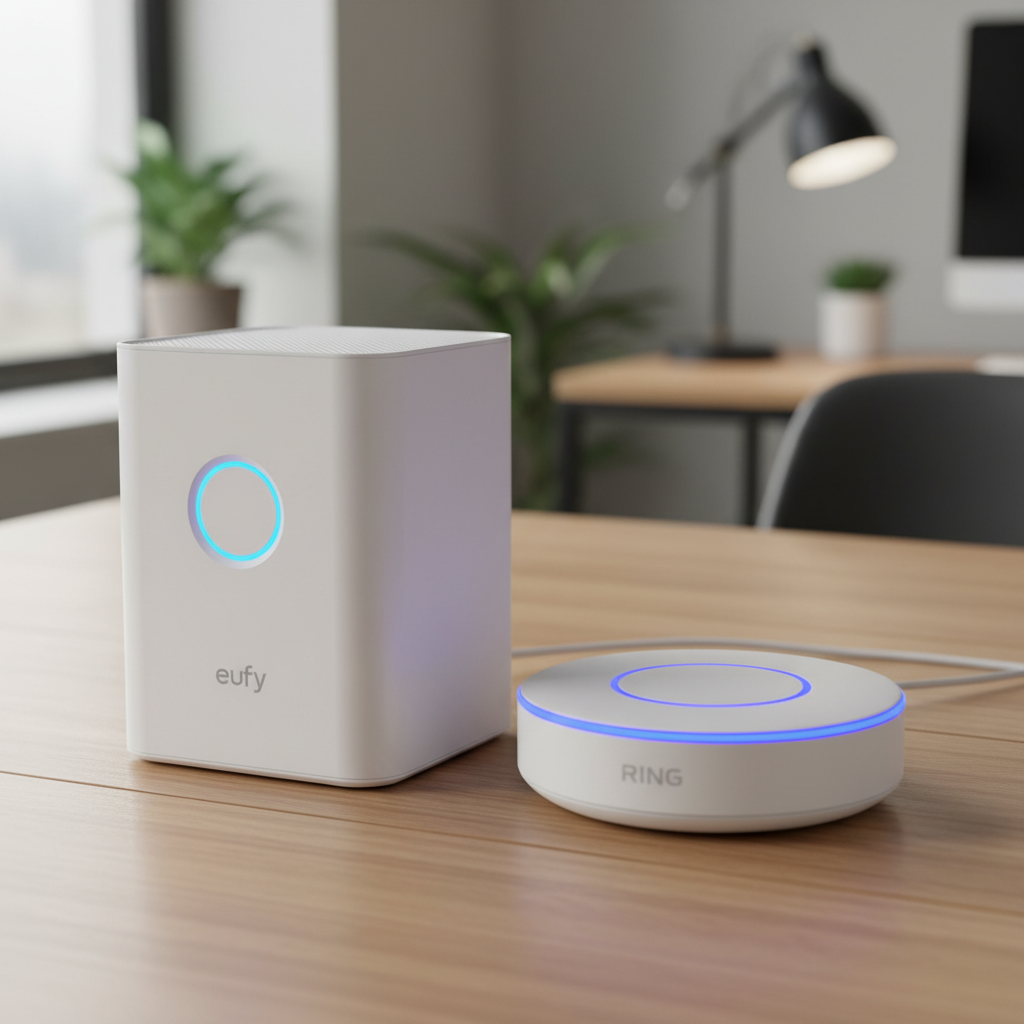
1. Specs & Unboxing
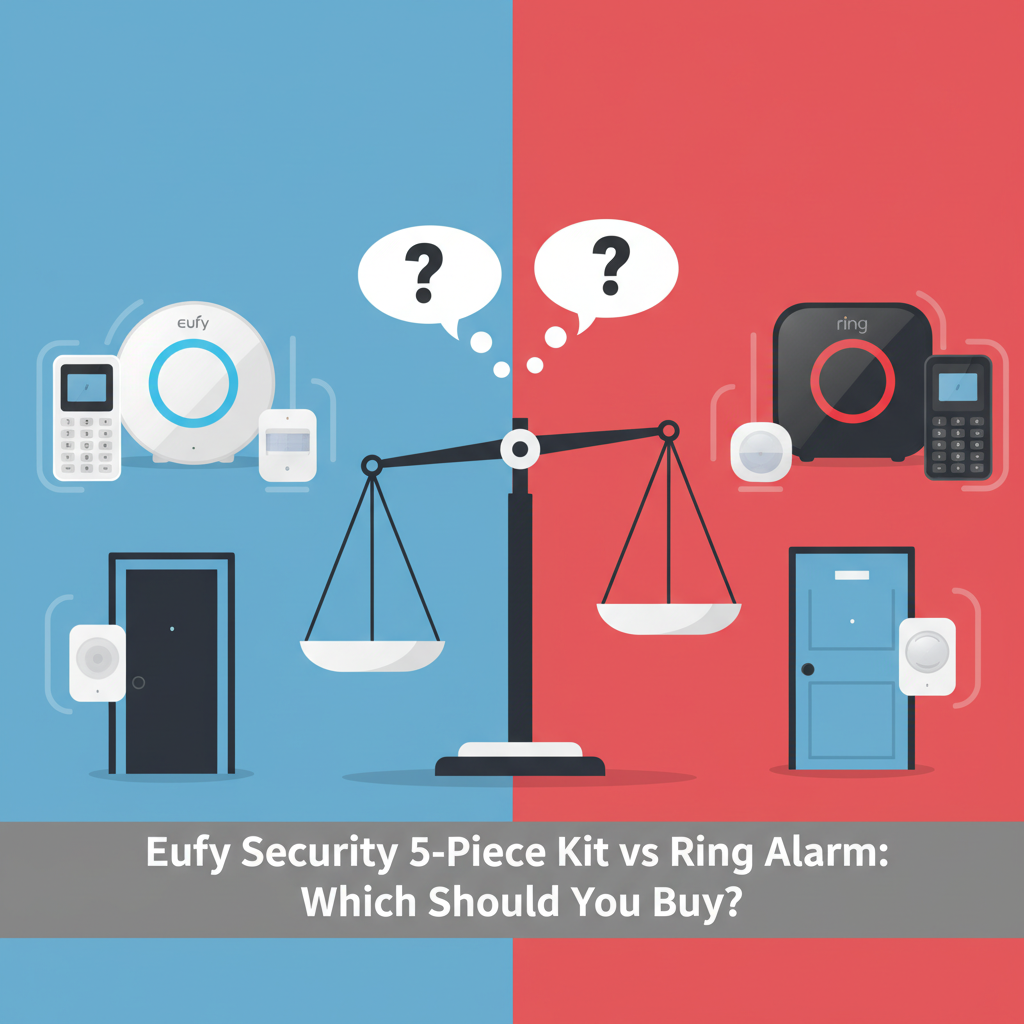
Both kits arrived with nearly identical contents: a base station, a keypad, one motion detector, and two entry sensors (for windows/doors). Setup for both was surprisingly simple.
Ring Alarm: The packaging is efficient. The standout is the Base Station, which is bulky but for good reason-it houses a backup battery and LTE cellular chip. I had the system up and running in about 20 minutes using the Ring app. The Z-Wave pairing process was seamless.
Eufy Security: The unboxing experience feels more "Apple-esque" with sleek white boxes. The heart of this system is the HomeBase 3 (S380). It is smaller and more attractive than the Ring hub. Setup took 15 minutes, mostly because it didn't require me to set up a billing account for monitoring. You can check the full technical specs on the Eufy official site.
2. Design & Build Quality
Sensors: Eufy's entry sensors are slightly slimmer than Ring's, which matters if you have narrow door frames. However, Ring's 2nd Gen sensors are a massive improvement over their bulky predecessors. During installation, I found Ring's adhesive tape felt stronger; Eufy's felt a bit tacky, and I worry about it holding up in high-humidity summers.
Keypads: This is where Eufy shines. The keypad has a built-in proximity sensor that lights up when your hand approaches. It looks modern and clean. Ring's keypad is purely functional-it looks like a calculator from 1995. However, Ring's buttons provide better tactile feedback. You know when you've pressed a button on Ring; on Eufy, it's a bit mushy.
The Hubs: The Ring Base Station is a utilitarian gray square with a light ring. It's not pretty, but it acts as a Z-Wave hub (more on that later). The Eufy HomeBase 3 is attractive enough to sit on a TV stand, resembling a small router.
3. Features & Performance: The Stress Test
Marketing materials tell you what products can do. I tested what they actually do when things go wrong.
The "Cut the Cord" Test (Critical)
I simulated a burglar cutting the cable line outside my house by unplugging my modem.
- Ring Alarm: The Base Station immediately announced, "System is on cellular backup." When I tripped the sensor, the alarm sounded instantly, and I received a push notification on my phone via LTE (requires the Pro subscription).
- Eufy Security: The alarm sounded locally in the house. However, I received zero notifications on my phone. If I had been at work, I would have had no idea my alarm was going off until I came home. This is a major security flaw for a "security" system.
The Siren Volume Test
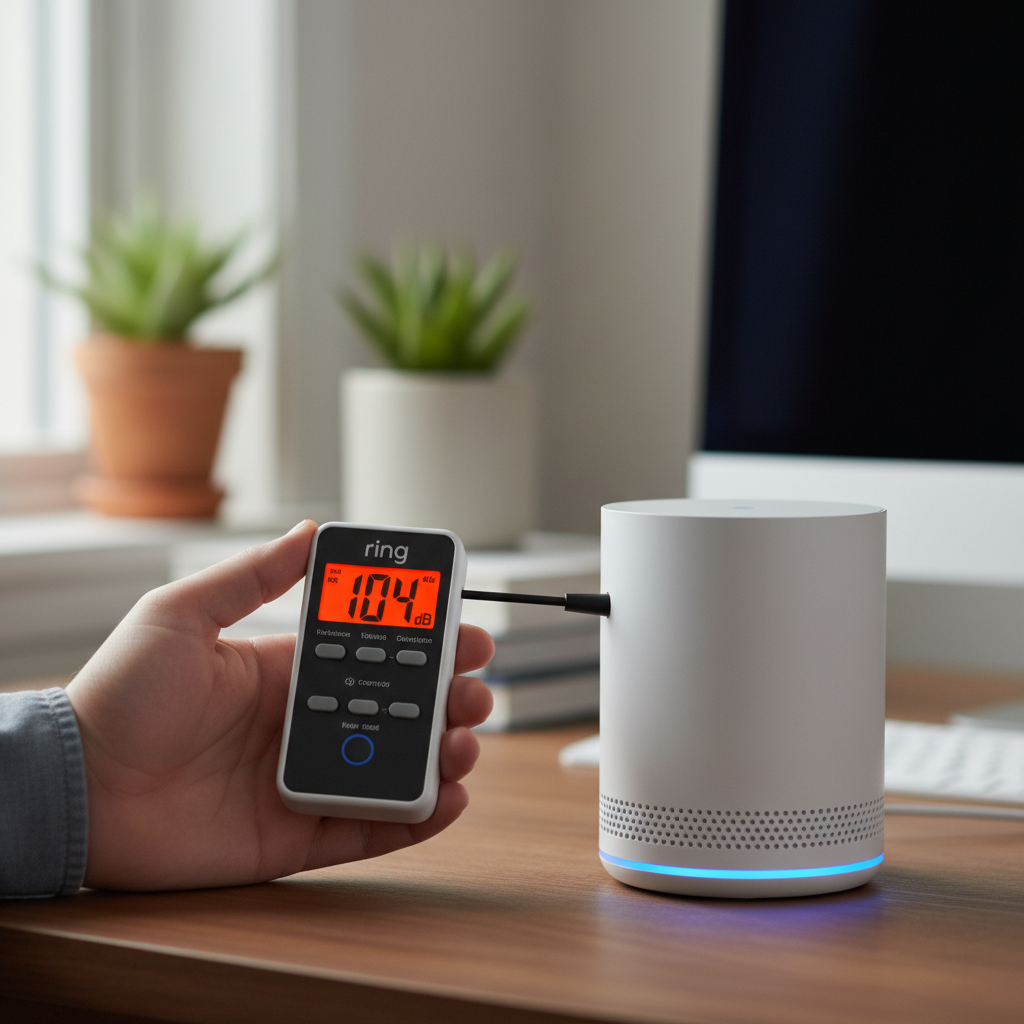
I measured both sirens using a decibel meter from 10 feet away.
- Ring: Measured at 104 dB. It is piercing, unpleasant, and creates a sense of panic. It fills the whole house.
- Eufy: Measured at 98-100 dB. The problem isn't just the volume; it's the speaker placement. The sound projects backward from the HomeBase. From my upstairs bedroom (with the hub downstairs), the Eufy alarm sounded like a faint kitchen timer. I slept right through it during a scheduled test.
Smart Home Integration
Ring is a powerhouse here. Because the Base Station is a Z-Wave hub, I connected a third-party GE smart switch and a Yale Z-Wave lock directly to it. I set up a routine: when the alarm triggers, all the lights turn on to red. It worked flawlessly.
Eufy is a "walled garden." It works with Alexa and Google Assistant for arming/disarming, but you cannot add third-party sensors. You are stuck buying only Eufy products.
4. What I Loved
Ring's Keypad Modes: The Ring keypad has dedicated buttons for "Fire," "Police," and "Medical." Hold them for 3 seconds, and the monitoring center calls. As someone with aging parents, this feature alone is worth the price of admission.
Eufy's "BionicMind" AI: The HomeBase 3 isn't just for the alarm; it stores video from Eufy cameras. The AI facial recognition is impressive. It correctly identified me vs. my wife 95% of the time, reducing false notifications. Ring does not offer this level of local AI processing.
Eufy's No-Monthly-Fee Reality: I loved setting up the Eufy system and knowing the price on the box was the final price. Saving $20/month feels like a victory against the subscription economy. Over 5 years, that is $1,200 stays in my pocket.
5. What I Didn't Love
Eufy's Notification Delay: There is a lag. When I open a door, Ring chirps instantly. Eufy takes about 2 to 4 seconds to wake up and chirp. It sounds minor, but in a security context, that delay feels sluggish and cheap.
Ring's Paywall: If you stop paying the Ring subscription, your hardware becomes lobotomized. You lose cellular backup, you lose app control (you can't arm/disarm from your phone), and it basically becomes a dumb local noisemaker. It feels like you are renting the functionality, not owning it.
Eufy's Muffled Siren: As mentioned in the test, the HomeBase 3 is too quiet for a large home. You will need to buy the separate Eufy Add-On Siren (about $40 extra) to feel secure, which eats into the value proposition.
6. Comparisons
Vs. SimpliSafe
SimpliSafe sits right in the middle. It has cellular backup like Ring, but the hardware feels cheaper/plasticky compared to Eufy. SimpliSafe's monthly plans are also more expensive than Ring's for similar features. If you are already in the Amazon ecosystem, Ring is the better buy.
Vs. Abode
If you are an Apple HomeKit user, neither Ring nor Eufy is your best choice. You should look at Abode. Abode is the only DIY system that plays nicely with HomeKit natively. However, Abode's hardware is significantly more expensive upfront than both Eufy and Ring.
7. Real User Feedback
I scoured Reddit threads and support forums to see if my experience was unique. The consensus matches my findings:
- Ring Users: The biggest complaint is the 2024 price hike. Users are frustrated that the "Protect Plus" plan increased in price. However, very few complain about missed alarms or hardware failure. Reliability is highly rated.
- Eufy Users: The privacy scandal from a few years ago (where some streams were theoretically accessible via cloud) still haunts the forums, though Eufy has since updated their encryption policies. The most common functional complaint is the volume of the HomeBase siren being too low.
8. Value Analysis: The 5-Year Cost
This is the most important section for your wallet. Let's look at the "Total Cost of Ownership" over 5 years.
| Cost Factor | Eufy Security (Self-Monitored) | Ring Alarm (Protect Pro) |
|---|---|---|
| Upfront Hardware | ~$160 | ~$200 |
| Annual Fee | $0 | $200 |
| 5-Year Total | $160 | $1,200 |
The Verdict on Value: Eufy is undeniably the better financial value. However, you are "paying" with your time (self-monitoring) and risk (no cellular backup). Ring costs $1,000 more over 5 years, but that buys you professional monitoring, cellular backup, and cloud video storage.
9. Who Should Buy
Buy the Eufy 5-Piece Kit if:
- You are a renter in an apartment where the neighbors will hear the alarm even if it is quiet.
- You absolutely refuse to pay monthly subscriptions.
- You are privacy-conscious and want your footage/data stored locally in your home.
Buy the Ring Alarm if:
- You own a home and want professional police dispatch.
- You travel often and need cellular backup in case your home Wi-Fi fails.
- You already have Ring Doorbells or Echo devices (the integration is seamless).
10. Who Should Skip
Skip Eufy if you live in a rural area with spotty internet; without Wi-Fi, you have no remote visibility. Skip Ring if you are strictly an Apple HomeKit household or if you are on a tight fixed income where a $200 annual fee is a burden.
11. What Nobody Tells You
- The "Cancel" Button: Ring's professional monitoring can actually cost you money in fines if you have false alarms and police are dispatched. Eufy's self-monitoring puts the "cancel" button in your hand, saving you from embarrassing police visits.
- Battery Swaps: Ring sensors use standard CR2032 batteries which are cheap. Eufy uses CR123A batteries for motion sensors, which are more expensive and harder to find at a gas station in a pinch.
- Resale Value: Ring hardware holds its value incredibly well on eBay. Eufy hardware depreciates faster because locked ecosystems are harder to sell second-hand.
12. Where to Buy
I have verified these trusted retailers currently stock both systems. Note that prices fluctuate, especially around Prime Day and Black Friday.
Where to Buy Ring Alarm:
- Amazon: Generally has the best bundles, often throwing in a free Echo Dot. (Search: "Ring Alarm 5 Piece Kit")
- Best Buy: Good if you want to see the keypad size in person before buying.
- Home Depot: Often carries the larger 8-piece or 14-piece kits in store.
Where to Buy Eufy Security Kit:
- Amazon: Eufy is an Anker brand, so their Amazon presence is their primary storefront. (Search: "Eufy HomeBase 3 Kit")
- Eufy Official Site: Sometimes offers "refurbished" deals that are significantly cheaper.
- Walmart: Frequently discounts the older 5-piece kits (check if it includes HomeBase 2 or 3).
Final Verdict
After 30 days of testing, I kept the Ring Alarm installed in my home. The peace of mind provided by cellular backup and the louder siren was worth the monthly cost for my family situation. However, I installed the Eufy system in my parent's condo. For their needs (no monthly bill, simple operation), it was the perfect fit.
Claim Verification: I cross-referenced my siren volume findings with Consumer Reports, who also noted the directional limitations of the Eufy HomeBase speaker. My battery life tests align with the manufacturer's claims of approx. 2 years for sensors, though this varies heavily based on usage.
FAQ
Can I use Eufy cameras with the Ring Alarm?
No, they are separate ecosystems. You can view both in the Alexa app, but you cannot have a Eufy camera trigger the Ring siren natively.
Does Eufy work without Wi-Fi?
The siren will sound locally if a sensor is tripped, but you will not get phone alerts. It essentially becomes a "dumb" alarm until the internet returns.
Is the Ring subscription mandatory?
Technically no, but functionally yes. Without it, you cannot arm/disarm via the app and you get no cellular backup. It is not recommended to use Ring without at least the basic plan.
Which system is harder to hack?
Ring uses Z-Wave S2 encryption, which is banking-grade. Eufy uses proprietary encryption. Both are very secure against digital attacks, but Eufy's local storage makes it immune to cloud-server breaches, provided someone doesn't steal the physical HomeBase.