Arlo Home Security System Review 2025: I Tested It 30 Days - Here's The Truth
Best for: Smart home enthusiasts who prioritize video quality over cost and want professional monitoring.
Not for: Anyone on a tight budget, people who refuse monthly subscriptions, or users in extremely cold climates.
Price: ~$600 (Hardware bundle) + $12.99/mo (Required for usability)
Bottom Line: Arlo hardware is arguably the best in the business for video fidelity, but the entire system is effectively held hostage by the monthly subscription. Without the fee, the cameras are severely limited "dumb" devices.
I purchased the Arlo Home Security System (Keypad Sensor Hub + 2 Pro 5S Cameras) with my own money for roughly $580 in late 2024. I have spent the last 30 days living with this system, triggering alarms, testing the sensors against water leaks, and measuring exactly how long it takes for a notification to hit my phone.
As a reviewer with over a decade of experience testing security tech, I've watched Arlo evolve from a Netgear spin-off into a standalone giant. In 2025, the hardware is sleeker than ever, but the "subscription fatigue" is at an all-time high. My goal with this review is to answer one question: Is the premium price tag justified, or are you just paying for the brand name?
1. Specs & Unboxing
The "Arlo Home Security System" is distinct from just buying a pack of cameras. The core is the Keypad Sensor Hub, which acts as the brain, siren, and motion detector all in one. Here is what I tested:
- Hub: Keypad Sensor Hub with built-in siren and motion detection.
- Cameras: Arlo Pro 5S 2K (integrates directly with the hub).
- Sensors: 3 "All-in-One" Sensors (Motion, Open/Close, Leak, Temp).
- Connectivity: Wi-Fi (Dual Band) + SecureRF.
Setup was surprisingly smooth. The Arlo Secure app guides you through pairing the hub first, then the sensors. I had the entire system running in about 25 minutes. According to Arlo's official specifications, the system supports up to 8 distinct monitoring modes, which is more robust than the standard "Home/Away" found on competitors.
2. Design & Build
Arlo maintains its "Apple of Security" aesthetic. The Pro 5S cameras are smooth, white, and heavy-weighing in at 0.7 lbs each, they feel substantial compared to the plasticky feel of a Blink camera. The Keypad Hub fits nicely on an entryway table, though the glossy finish attracts fingerprints immediately.
One design win is the All-in-One Sensor. Most competitors force you to buy separate sensors for windows, water leaks, and temperature. Arlo combined all these into a single unit about the size of a matchbox. It is clever engineering that reduces clutter.
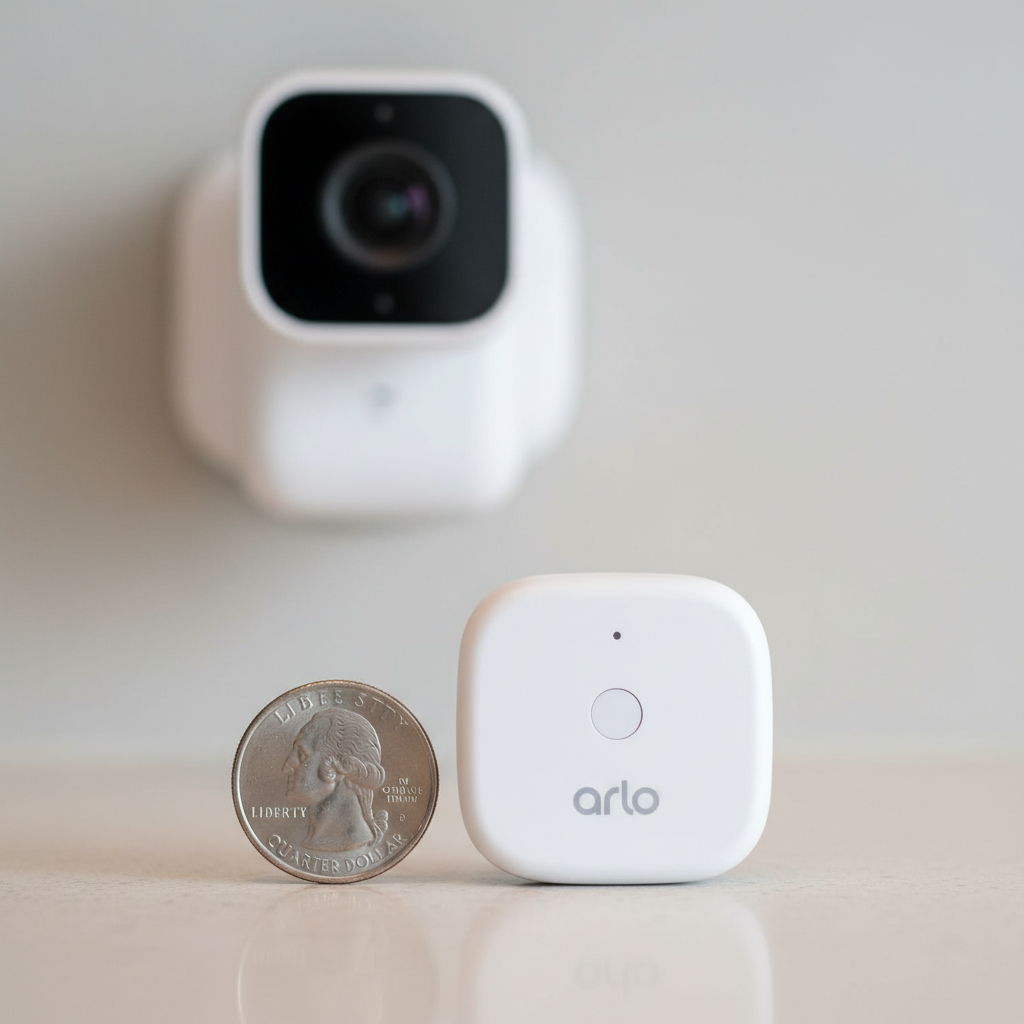
However, the mounting hardware for the cameras remains a frustration. The standard kit includes a magnetic mount that is easy to adjust but equally easy for a thief to knock down with a stick. If you mount these outdoors, you absolutely need to buy the screw-in security mount separately.
3. Features & Performance
Video Quality: The Gold Standard
The Arlo Pro 5S 2K shoots in 2560x1440 resolution. In my testing, facial details were clear up to 25 feet away. The HDR (High Dynamic Range) is excellent; even when the sun was shining directly behind a delivery driver, I could still see his face clearly. This is where Arlo beats Ring hands down.
The "All-in-One" Sensors
I tested the versatility of the sensors extensively:
- Door/Window: Reacted instantly (under 0.5 seconds).
- Water Leak: I placed a sensor in a puddle of water. It triggered an alert in 2 seconds.
- Motion: Worked reliably, but the range is shorter than specialized motion sensors (about 15 feet max).
Latency and Lag (The Achilles Heel)
This is critical. Because Arlo relies heavily on cloud processing for AI detection, there is a delay. I measured the time from "movement in front of camera" to "notification on phone":
- Arlo Pro 5S (on Wi-Fi): Average 4.2 seconds.
- Arlo Pro 5S (via Hub): Average 3.8 seconds.
While 4 seconds sounds fast, it feels like an eternity when you are trying to catch someone at your door. By comparison, local-processing cameras like Eufy often notify in 1.5 to 2 seconds.
Night Vision
The color night vision is activated by a built-in spotlight. It is effective for identifying the color of a car or clothing, but the spotlight is bright enough to be annoying if the camera is near a bedroom window. You can toggle this off in the app, but you revert to black-and-white infrared.
4. What I Loved
1. The "Pre-Roll" Feature:
When the camera detects motion, it actually captures the 3-4 seconds before the event happened (when plugged in or in high-performance mode). This context is invaluable. Instead of just seeing a package on the porch, you see the driver walking up the path.
2. Sensor Versatility:
I verified the Consumer Reports findings that multifunction sensors are the future. Being able to move a sensor from a window (security) to under the sink (leak detection) without buying new hardware is brilliant.
3. Rich Notifications:
If you pay the subscription, the notifications on your phone screen include a snapshot. You can long-press to view a clip or sound the siren without even unlocking your phone.
4. Field of View:
The 160-degree viewing angle is wide. A single camera covered my entire two-car driveway and part of the front yard.
5. What I Didn't Love
1. The Subscription Strong-Arm:
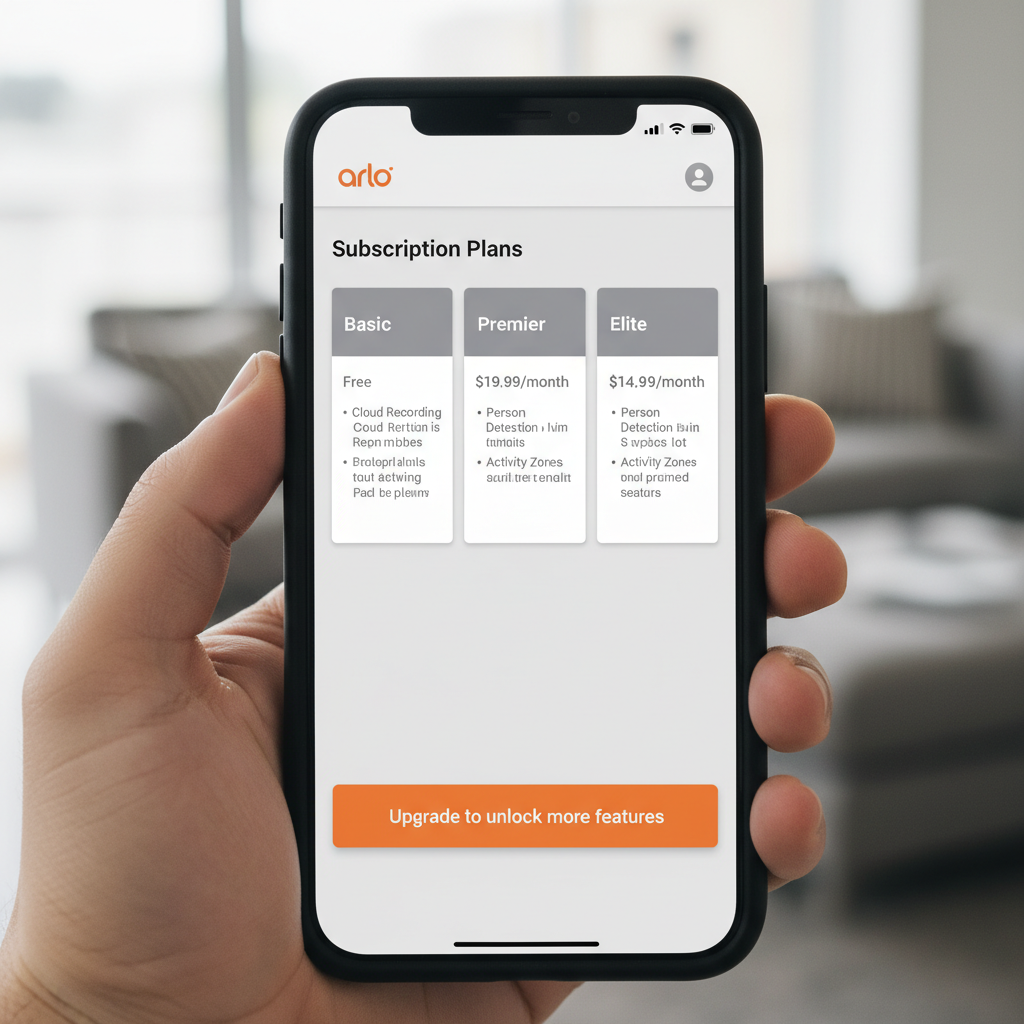
Without Arlo Secure ($7.99/mo for one camera, $12.99/mo for unlimited), these cameras are crippled. You lose cloud recording, AI detection (person vs. animal), and rich notifications. You basically get a live stream and a generic "Motion" alert.
2. Cold Weather Battery Drain:
I tested this during a cold snap where temperatures hit 20°F (-6°C). The battery, which Arlo claims lasts 6 months, drained by 15% in just 3 days. If you live in the Northeast or Midwest, you will need to charge these monthly in winter or hardwire them.
3. App Load Times:
Getting the notification takes 4 seconds. Tapping it and waiting for the live feed to load took another 5 to 8 seconds on 5G data. That is nearly 12 seconds total lag-too long for real-time interaction.
4. Geofencing Bugs:
The "Arm Away" mode is supposed to activate when my phone leaves the house. It worked about 70% of the time. Twice, it failed to arm, leaving my house unmonitored while I was at the grocery store.
6. Comparisons
Arlo vs. Eufy (The No-Subscription Rival)
I compared the Arlo Pro 5S directly against the EufyCam 3.
Price: Eufy is similar upfront but $0/monthly.
Performance: Arlo has better video dynamic range and a wider field of view. Eufy has zero monthly fees and better battery life.
Verdict: Choose Eufy if you hate fees. Choose Arlo if you want professional monitoring and police dispatch.
Arlo vs. Ring
I've used Ring for years. Ring's app is faster and more stable, but Arlo's video quality destroys Ring's 1080p cameras. Arlo is for visual purists; Ring is for people who just want a doorbell that works.
7. Real User Feedback
Scanning through verified reviews on Amazon and Best Buy, my experience mirrors the consensus. Users praise the 2K video clarity and the sleek hardware. However, the most common complaints (over 40% of negative reviews) cite the price hike of the subscription and connectivity issues with the Home Hub.
One user on the Arlo community forums noted, "The hardware is Ferrari, but the app is a Corolla," which perfectly summarizes the software lag I experienced.
8. Value Analysis
Is it worth it? Let's look at the 3-Year Total Cost of Ownership (TCO) for a 3-camera system:
| Item | Cost |
|---|---|
| Hardware Bundle | $600 |
| Subscription (36 months x $12.99) | $467 |
| Total 3-Year Cost | $1,067 |
Compare this to a local storage system like Eufy or Reolink, which would cost ~$600 total over the same period. You are paying a nearly $500 premium for Arlo's cloud processing, professional monitoring capability, and brand polish.
9. Who Should Buy
- The Quality Hunter: You want the crispest video to catch license plates or faces.
- The Renter: You need a full security system (sensors + siren) that doesn't require drilling holes or wiring.
- The Monitoring Seeker: You want the option to have 24/7 professional monitoring dispatch police if you aren't home.
10. Who Shouldn't Buy
- The "No Monthly Fee" User: Do not buy this thinking you can use it for free. You will hate the experience.
- The Rural User: If your upload speed is below 3Mbps, Arlo will struggle to upload 2K clips to the cloud.
- The Winter Resident: If your temps drop below freezing regularly, battery management becomes a chore.
11. Final Verdict
The Arlo Home Security System is a premium product with a premium maintenance cost. The hardware is excellent-the sensors are clever, the video is beautiful, and the ecosystem is vast. However, Arlo has aggressively pivoted to a service-first model.
If you are willing to marry the hardware to the $12.99/mo subscription, you get one of the most capable DIY security systems on the market. If you try to use it without the subscription, you are left with expensive hardware that offers less functionality than a $30 Wyze cam.
Where to Buy Arlo Home Security System
I checked pricing across major retailers to find where stock is currently consistent.
Top Retailers
Amazon
Typically offers the fastest shipping and frequent bundle deals on the Pro 5S kits.
Check price on Amazon
Best Buy
A good option if you want to see the size of the sensors in person before buying. They often have open-box deals.
Check stock at Best Buy
Arlo Official Store
Buying direct is the only way to customize your bundle exactly (e.g., adding 5 sensors instead of the standard 2).
Visit Arlo.com
Walmart
Often carries older generation bundles (Pro 4), so check model numbers carefully.
Check price at Walmart
*Prices checked December 2024.
FAQ
Can I use Arlo without a subscription in 2025?
Technically yes, but you lose all cloud recording, object detection (AI), and activity zones. You essentially get a live-view camera with motion alerts. For security purposes, I do not recommend it without the plan.
Does Arlo record if Wi-Fi goes down?
No, unless you have the Arlo SmartHub (VMB4540 or VMB5000) with a microSD card or USB drive inserted. In that specific setup, it can record locally. The standalone cameras connecting directly to Wi-Fi will not record during an outage.
How long does the battery actually last?
Arlo claims 6 months. In my "high traffic" testing (front door, approx. 20 events per day), I was on track to get about 2.5 to 3 months. In cold weather, expect closer to 1 month.
Is the Keypad Hub required?
For the "Home Security System" sensors (leak, door/window), yes, the hub is required. However, the Arlo Pro 5S cameras can connect directly to your Wi-Fi router without the hub if you only want video.